Built so a Data Analyst doesn't need to touch code
Modeo — 2025
Overview
Stash is a B2B SaaS built by Modeo, a data engineering consultancy, so that a company could run its data platform without a full-time Data Engineer. The goal was for a business team, starting with Data Analysts, to take over after a short onboarding from a Data Engineer, and let the product handle the rest.
I joined almost at the start as the founding product designer, the only designer on a team of one full-stack developer, two Data Engineers and a product manager. I owned product design end to end, and most decisions were made between the product manager and me, fed by the Data Engineers and by client feedback. We shipped a first version that Modeo's Data Engineers used on client missions.
The problem
Running a data platform means connecting sources such as Slack, PostgreSQL or Snowflake, watching whether they're healthy, and fixing them when they break. All of it normally happens in code: credentials, API calls, command-line checks. The people who would operate a platform like this day to day don't write that code. The brief was to turn a code-first job into something a non-technical team could run with confidence.
Two users
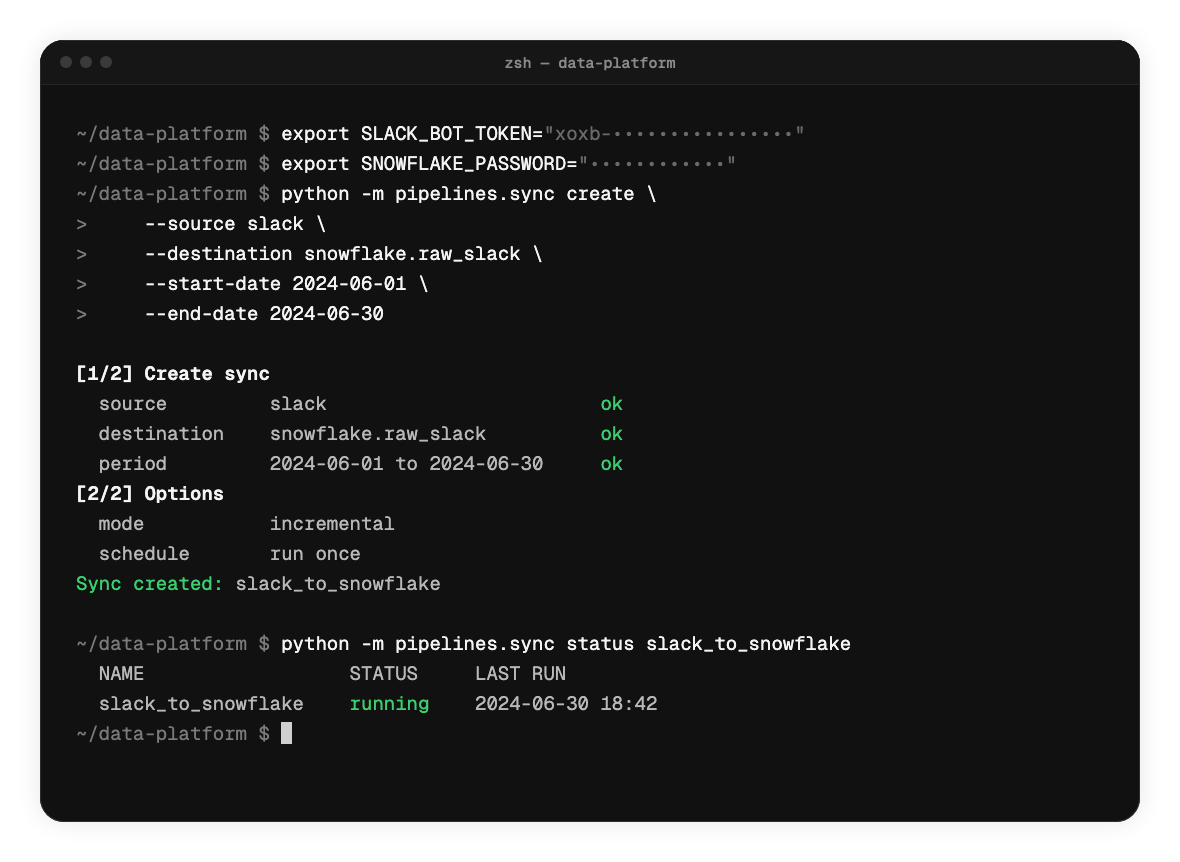
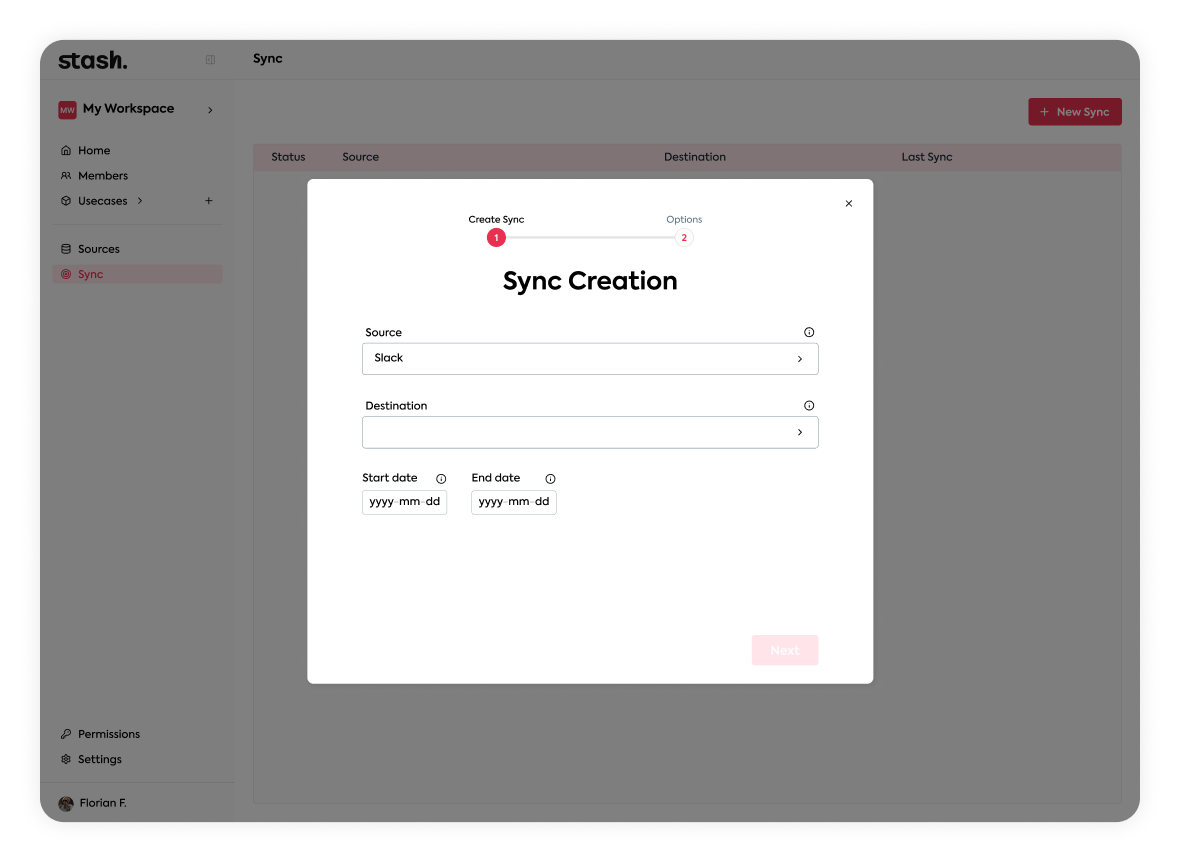
Stash had two users at once. The launch target was Data Analysts. The first usable version, though, served Modeo's own Data Engineers: the backend was further along than the interface, so using it still took someone who understood what ran underneath. I designed for both. The Data Engineers needed speed and control right away, and every screen also had to move toward something an analyst could use without reading code.
Learning the code
There was no formal discovery phase. I learned the product from the Data Engineers, every day, and turned what I understood into tickets as we went. To make that exchange regular, I set up a weekly design review. The Data Engineers walked me through what mattered in their code, I showed where the design stood, and together we decided what the interface should surface and what it could hide. It also got them looking at the product from the user's side, not only the code's. It's a lighter process than I'd usually recommend, but it kept me one conversation away from the people who'd feel a bad decision first.
Sources
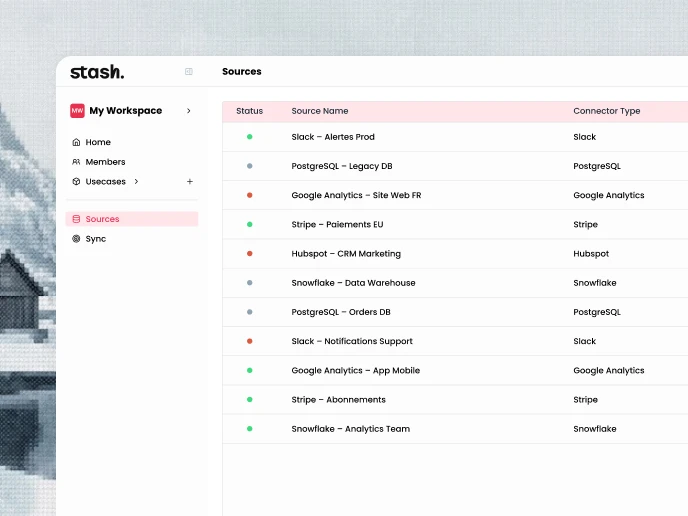
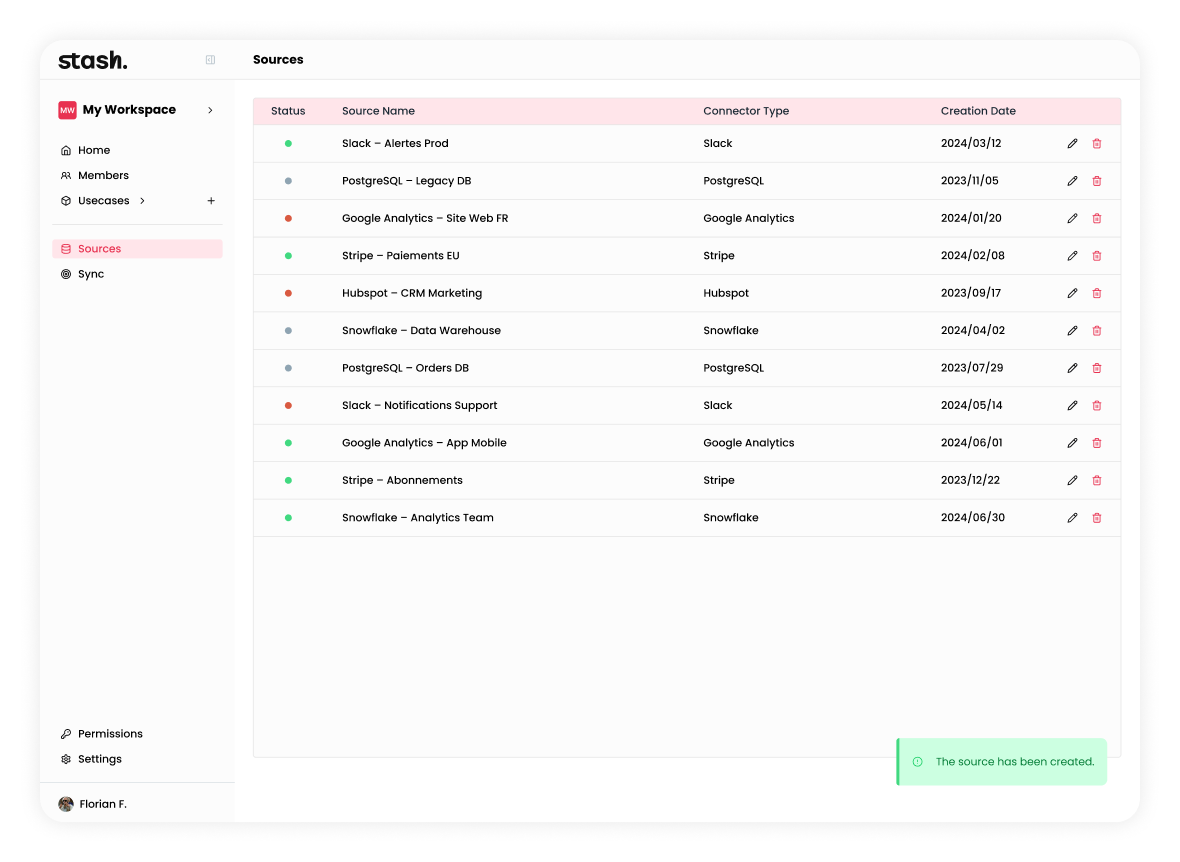
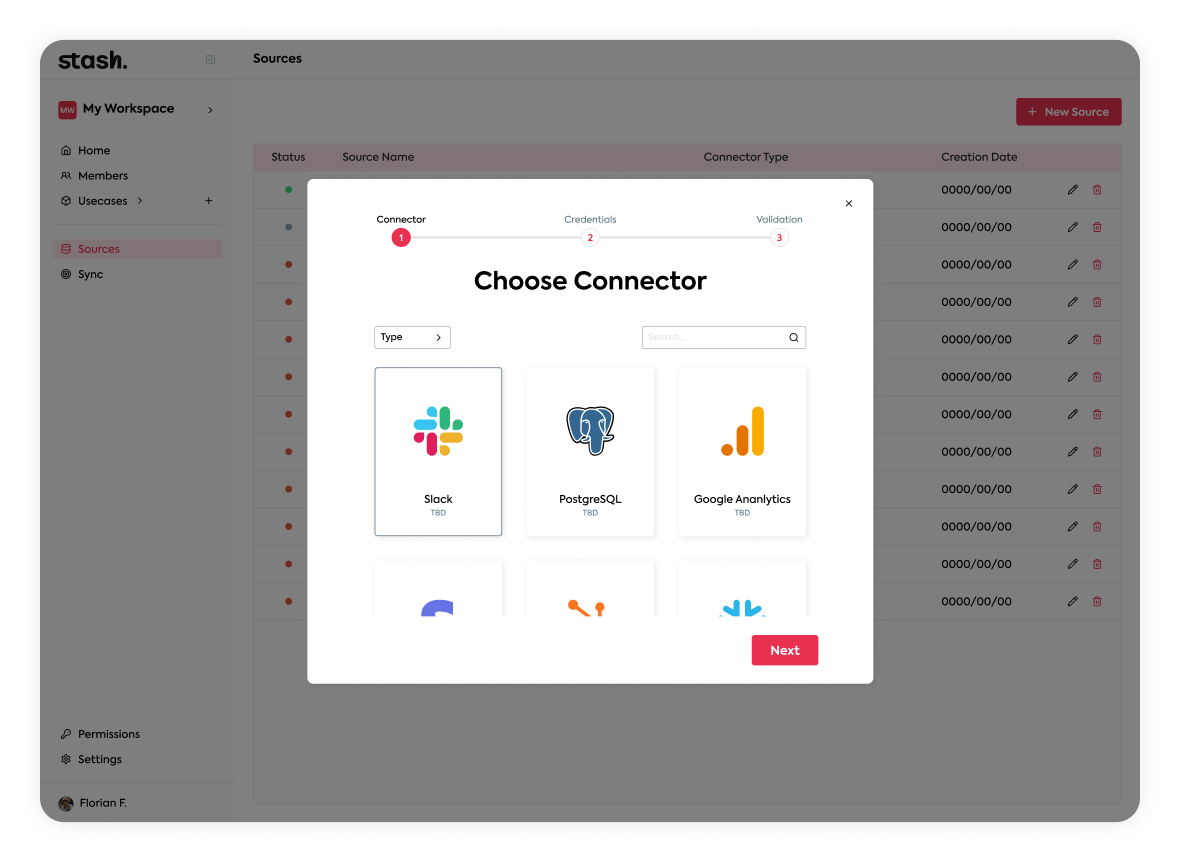
The two flows I cared most about were the sources dashboard and adding a new source. The dashboard is where a team sees every connection and its state at a glance. Behind each line sits code that knows how to talk to that specific source. On screen, a broken connection is a color and a button to reconnect.
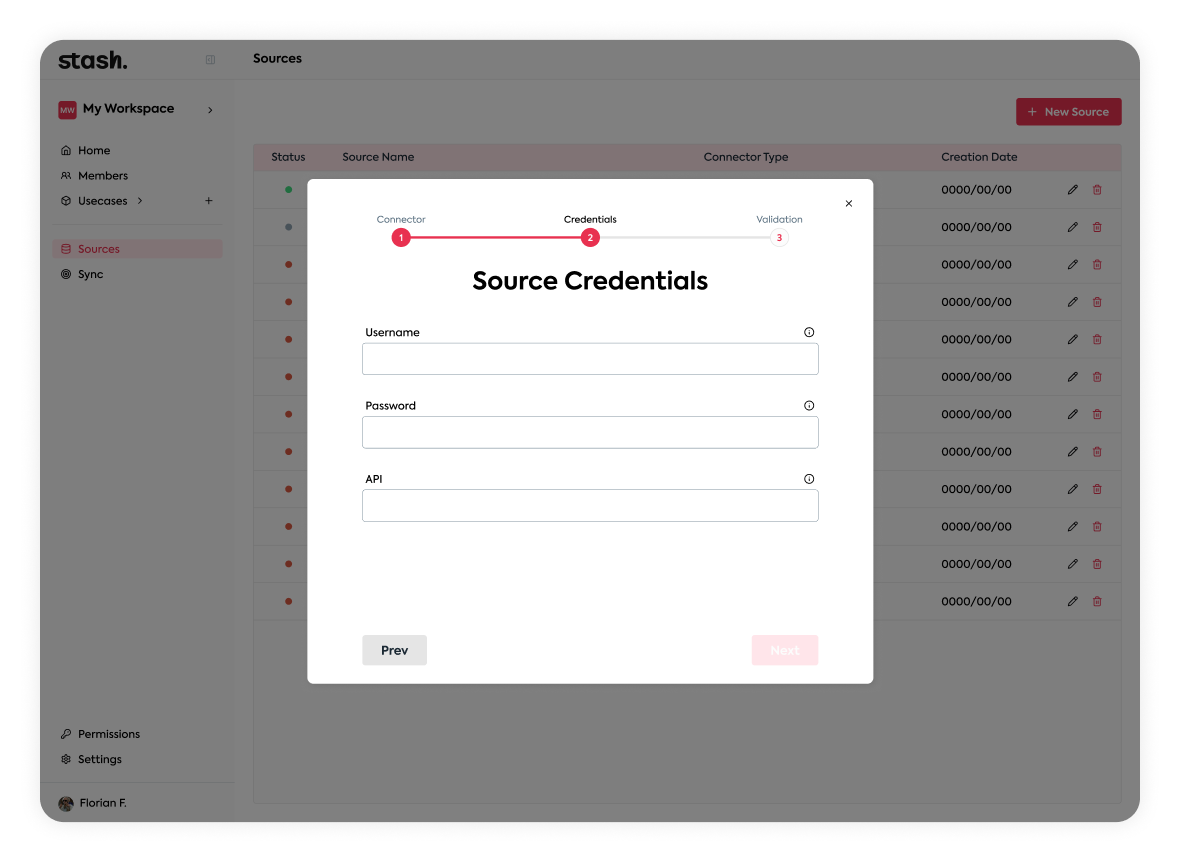
Adding a source started as a single form: pick a source, fill in every credential field, submit. In design reviews, the Data Engineers kept raising the same point: they wanted to know where they stood while filling it in, not only whether it all worked at the end. So the form became a step-by-step flow. You pick the source by its logo, so recognizing it doesn't require reading, enter credentials one step at a time, and see the connection status right away. Once the friction was named, we fixed it fast.
Roles
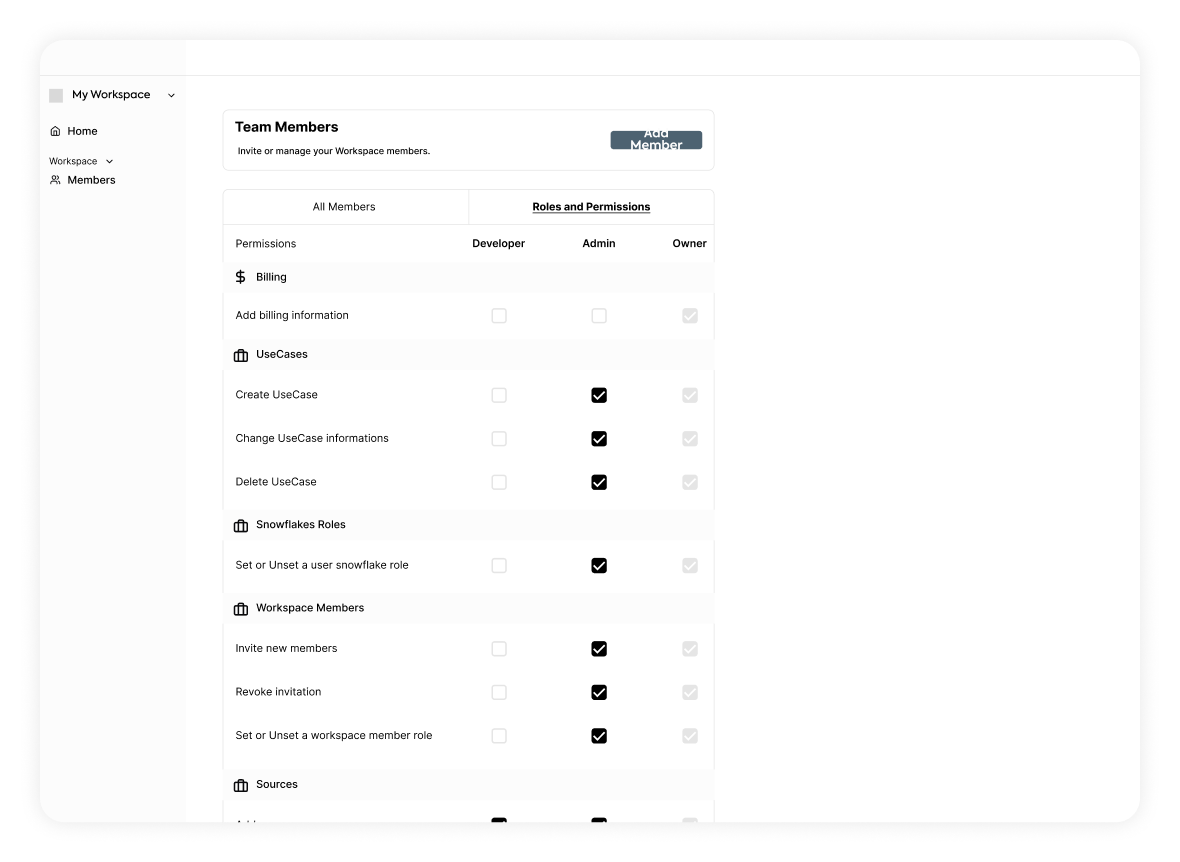
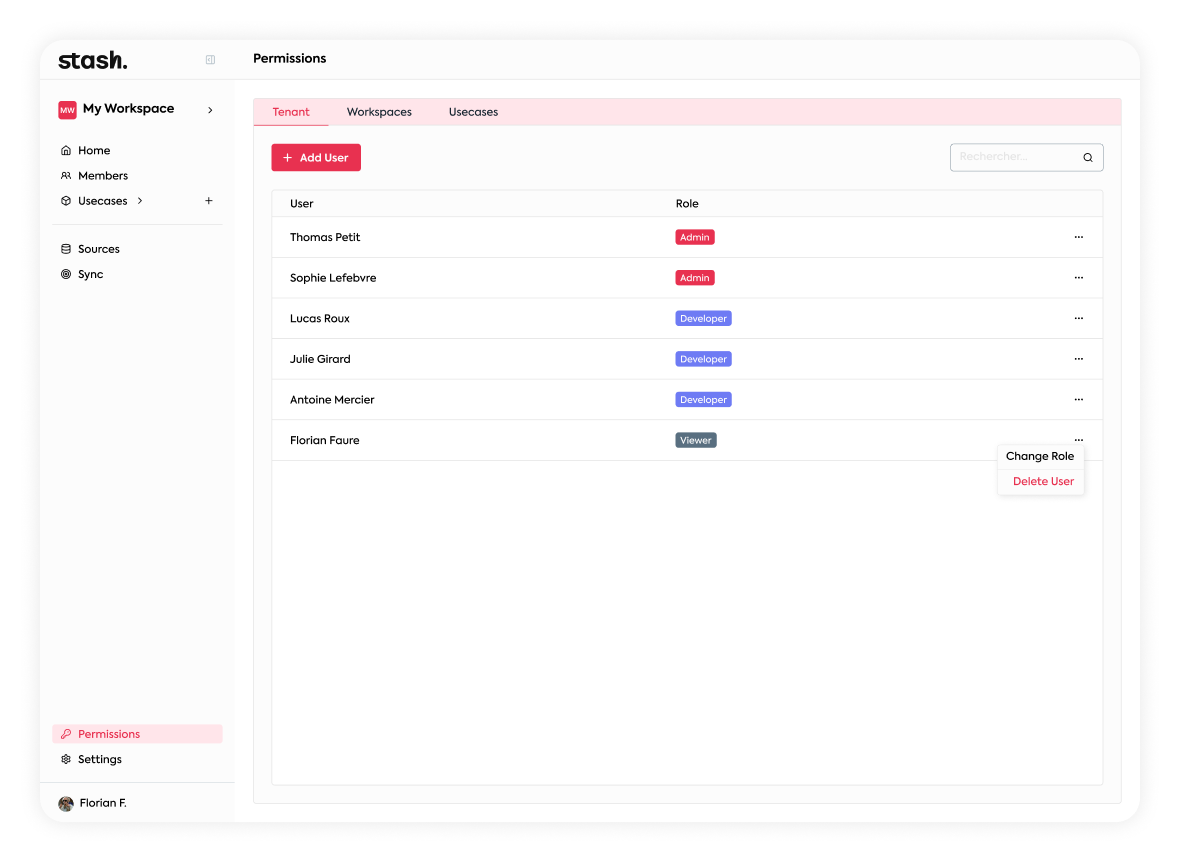
A workspace also needed to say who could do what. I kept three roles: an Admin can do everything, a Developer can edit, a Viewer can only look. It's the model data tools already use, it mirrors how the sources themselves handle access, and it fit a technical constraint. A finer, per-source model would have been flexible in ways nobody had asked for yet.
One system
When I arrived, the developer had already laid out a few screens on his own. I took them over and built a design system around them: atomic components up to full patterns, consistent styles, tokens on the code side, and light documentation in Figma on when to use which component. With five people building one product, the point wasn't polish. It was a shared language, so the developer, the Data Engineers, the product manager and I described the same interface in the same way.
Outcome
The first version did its job: Modeo's Data Engineers used Stash on client missions to deploy data platforms faster. As one of them told me, making something this complex simple for anyone was what would sell the product.
Modeo later chose to refocus on its consulting business rather than carry a new product's early losses, and work on the interface was paused. The backend kept running on the Data Engineers' missions.
Learnings
Having real users inside the team was a huge accelerator. Looking back, I'd pair that closeness with research outside it, interviewing future client teams to check that what our Data Engineers needed matched what the market would buy.
Translating a technical product into a simple interface is one of the most useful exercises I've done as a designer. You can't simplify what you don't understand, so it forces you to learn what the product actually does before deciding what anyone should see.
And a light process, a daily, a weekly and a design review, moved faster than a heavy one would have with a team this size.

Florian Faure
Product Designer