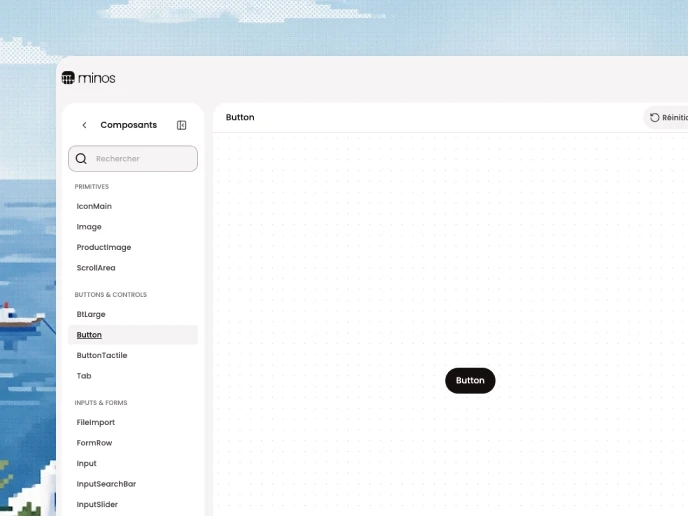
Rebuilt from scratch after four versions of patched-on debt
Vente-unique · Habitat — 2026
Overview
Vente-unique (opens in a new tab) is a European furniture retailer with over €200 million in annual revenue and more than three million customers delivered. Its group also owns Habitat (opens in a new tab). Minos is the design system both brands run on: one foundation, in production on both sites.
I worked on it as a product designer, paired with a senior product designer. We split the work by brand: I took Habitat, he took Vente-unique, and either of us could step into the other's scope at any time. Four front-end developers worked on the system in rotation.
- 100+components in the library
- 2brands on one foundation
- 15 daysto build a feature, down from 4 months
The drift
I joined while the previous system, version 4, was still in use. Each version had started from the one before and carried its debt forward, and it showed in daily work. What was designed and what shipped kept drifting apart. Components contradicted each other. Some values were hard-coded instead of coming from tokens, so a change in one place never reached the others. Designing a feature took long, and building it took longer, because every mock-up had to be interpreted, then checked again in QA.
Rather than patch version 4 once more, the team started over. Minos is the fifth version, rebuilt from scratch around one idea: leave no gap between design and code for anyone to drift into.
Architecture
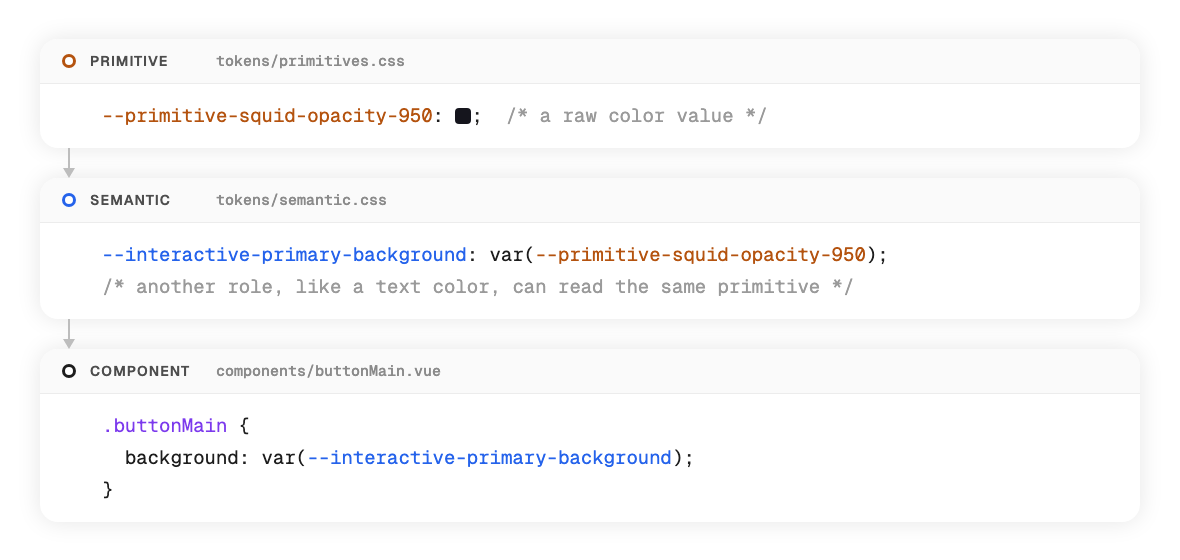
Minos runs on three layers. A raw color value becomes a primitive token, --primitive-squid-opacity-950, which feeds a semantic token named after its role, like --interactive-primary-background. Components only consume the semantic layer. One primitive can serve several roles, a button background and a text color for instance, without ever being called directly, so changing what "primary" means updates every component that relies on it.
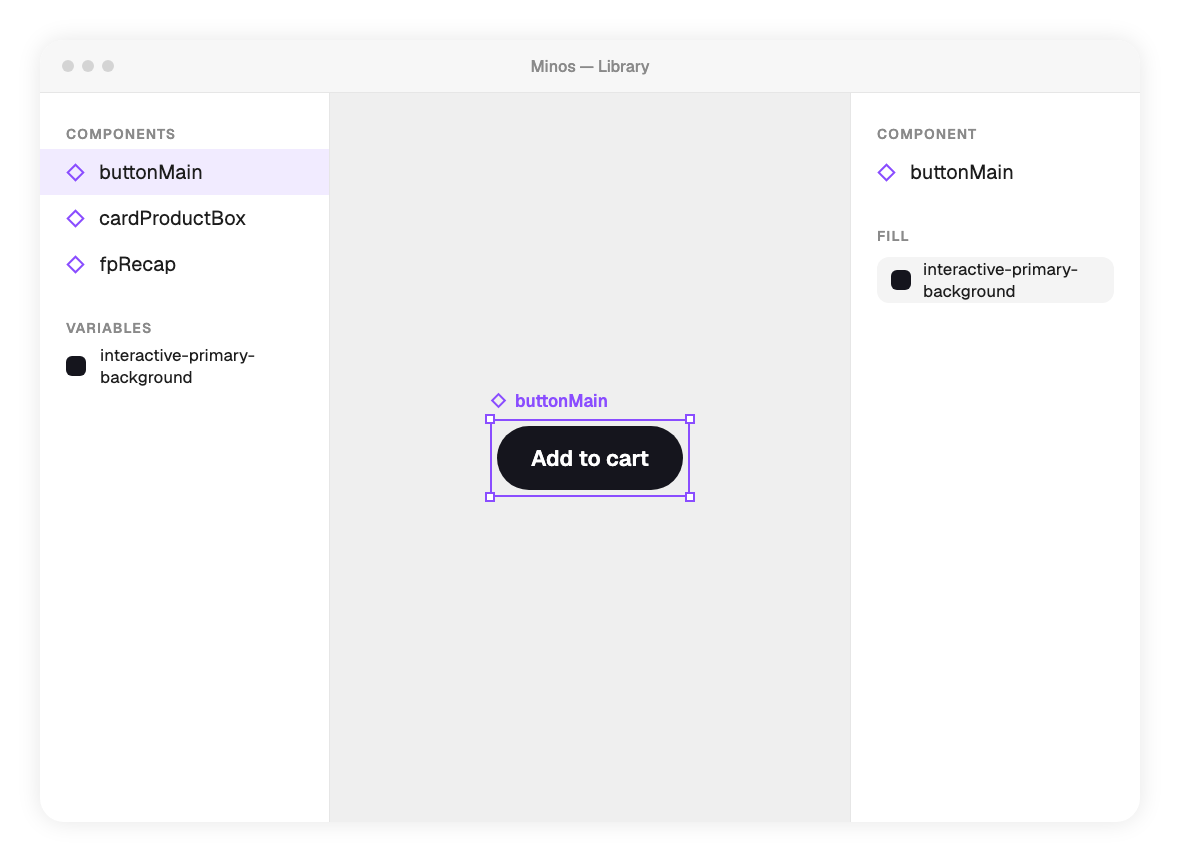
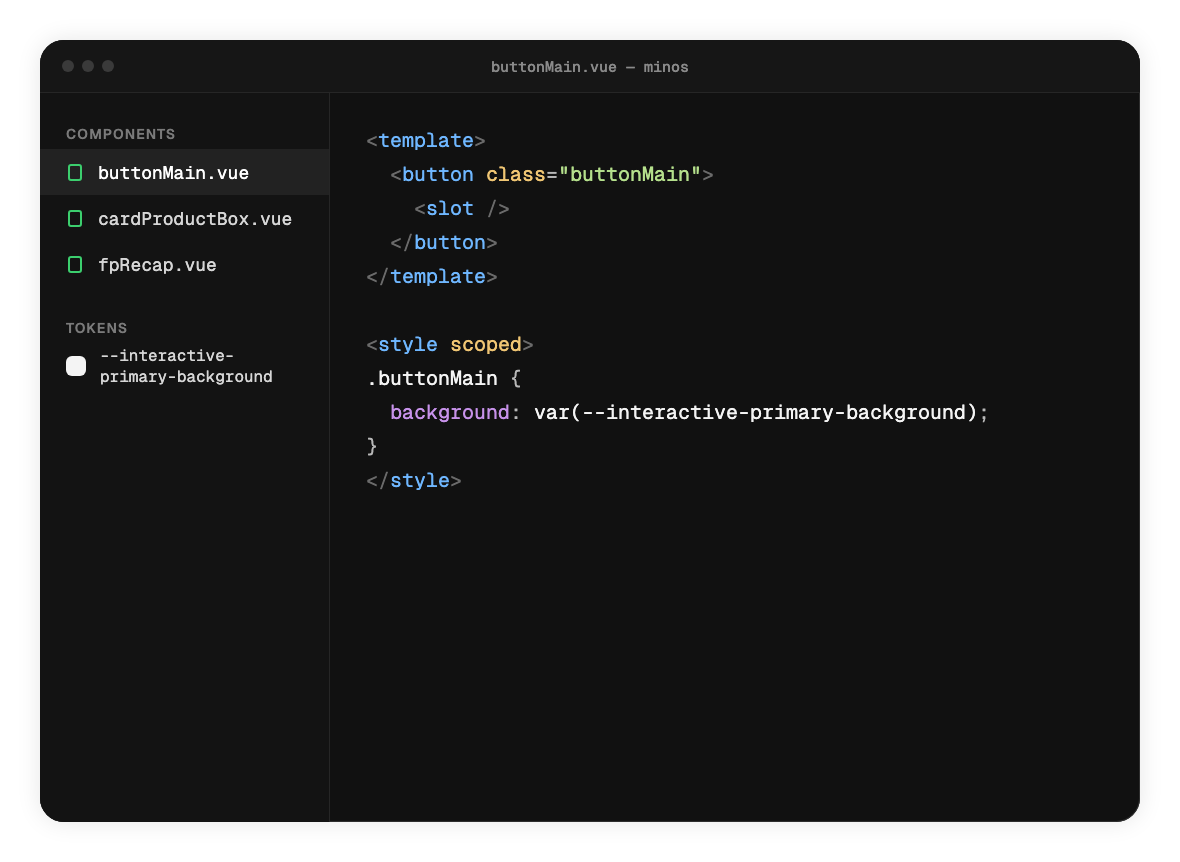
Names are shared end to end. A component has the same name in Figma and in Vue (buttonMain, cardProductBox, fpRecap), and so do the tokens, so a developer opening a mock-up finds the structure they're about to write. Each component also carries its own rules, such as a single primary button per context, or 12px as the smallest text size.
Design to code
The library isn't a design file with code behind it. The Vue components are the ones running on both sites, and the same library is where we prototype, so each component exists in one version only.
I wrote the first draft of a large share of those components. The flow went like this: I framed the request with Claude and built a first working version of the component in Vue. A second agent, with the context of that build, turned it into a clear spec for the developers, who implemented it in the library and in production with their own agents.
The product page gallery is a good example. Its slider needed more interaction and clearer feedback, so shoppers always understand what's happening on screen: which image they're on, what just moved, what comes next. Working on that in code, with real motion and real states, was faster and more accurate than any static mock-up. The gallery ships in three desktop layouts and a mobile one.
Two brands
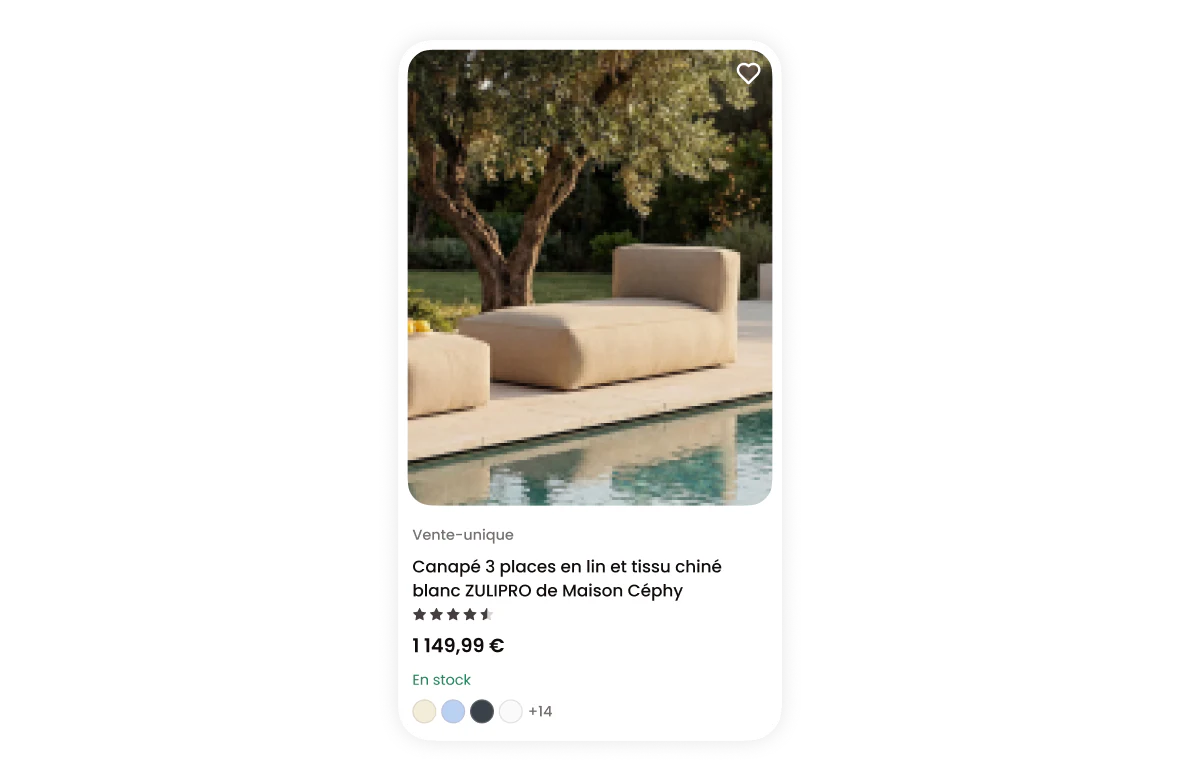
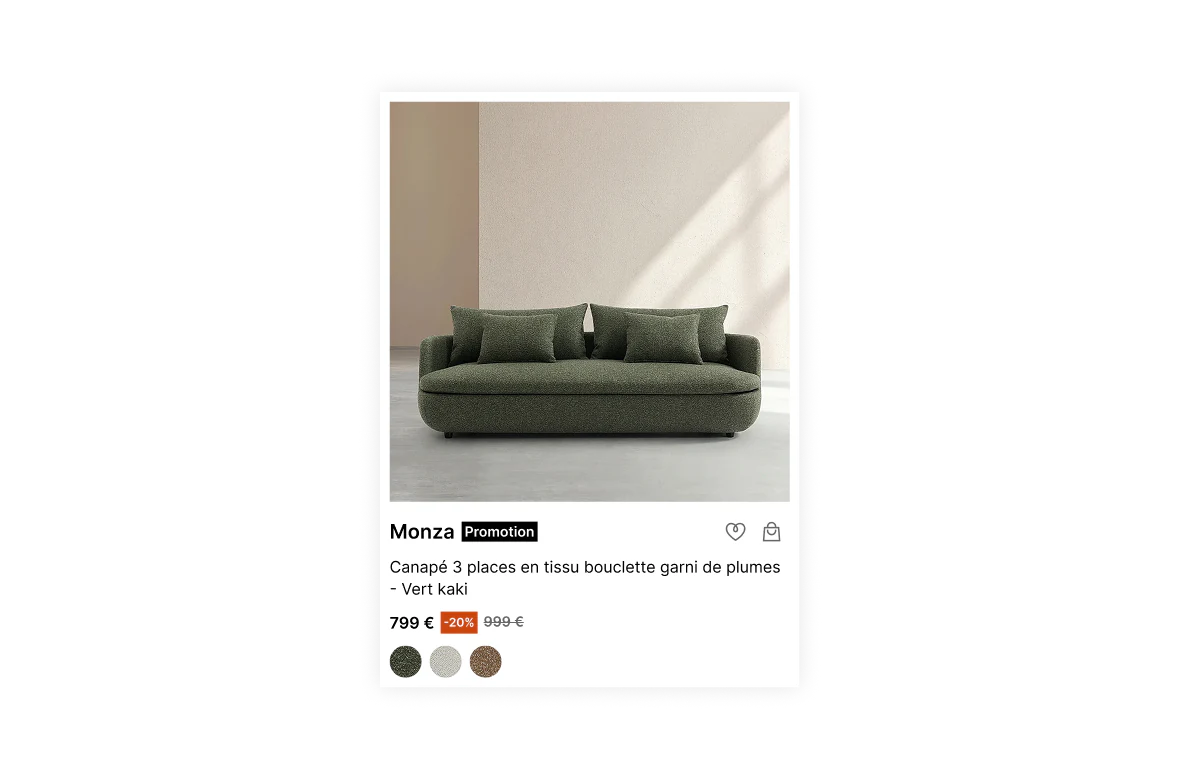
Vente-unique and Habitat don't sell to the same people. Vente-unique targets 25 to 35 year olds with accessible prices, and its product card carries a lot of information. Habitat is more upscale, with pricier products, so its interface puts the material and the quality of each piece first, keeps every interaction simple, and offers more choice: longer payment plans and, on its flagship products, a wide range of finishes.
Minos handles that difference in two ways. Shared variables carry a mode for each brand, so most of the difference lives in tokens. When the brand guidelines can't be expressed through variables alone, a component gets a dedicated variant. Habitat was my scope: redesigning its pages, designing components, and building the variants that only Habitat needed.
Governance
Most decisions came out of short discussions with the other designer: five to fifteen minutes on a component, each of us bringing our arguments, until we agreed. I wrote many of the system's rules, in Jira tickets as the work went along and in an internal Figma documentation, and I turned down new components that were too close to an existing one to deserve their own. At every release, the team checked that each variable and each component was used correctly, so nothing shipped outside the system unnoticed. When Figma introduced slots, mirroring what Vue already had, we used them to remove about thirty variants that only existed because instances couldn't take free content.
I also set up the team's rhythm: a daily within the design team, a weekly with product, and a weekly with tech and product, so design, product and tech decisions each had a fixed place.
Impact
Vente-unique had no budget for user research: no A/B tests, no session analytics. The data team measured each redesign before and after, over several weeks. Two things need to stay separate in those numbers.
What Minos changed is the speed and fidelity of delivery. Building a feature went from four months to fifteen days. The redesign of the product page summary, which once took a year of approval rounds and raw HTML development, now goes from handoff to production in two weeks.
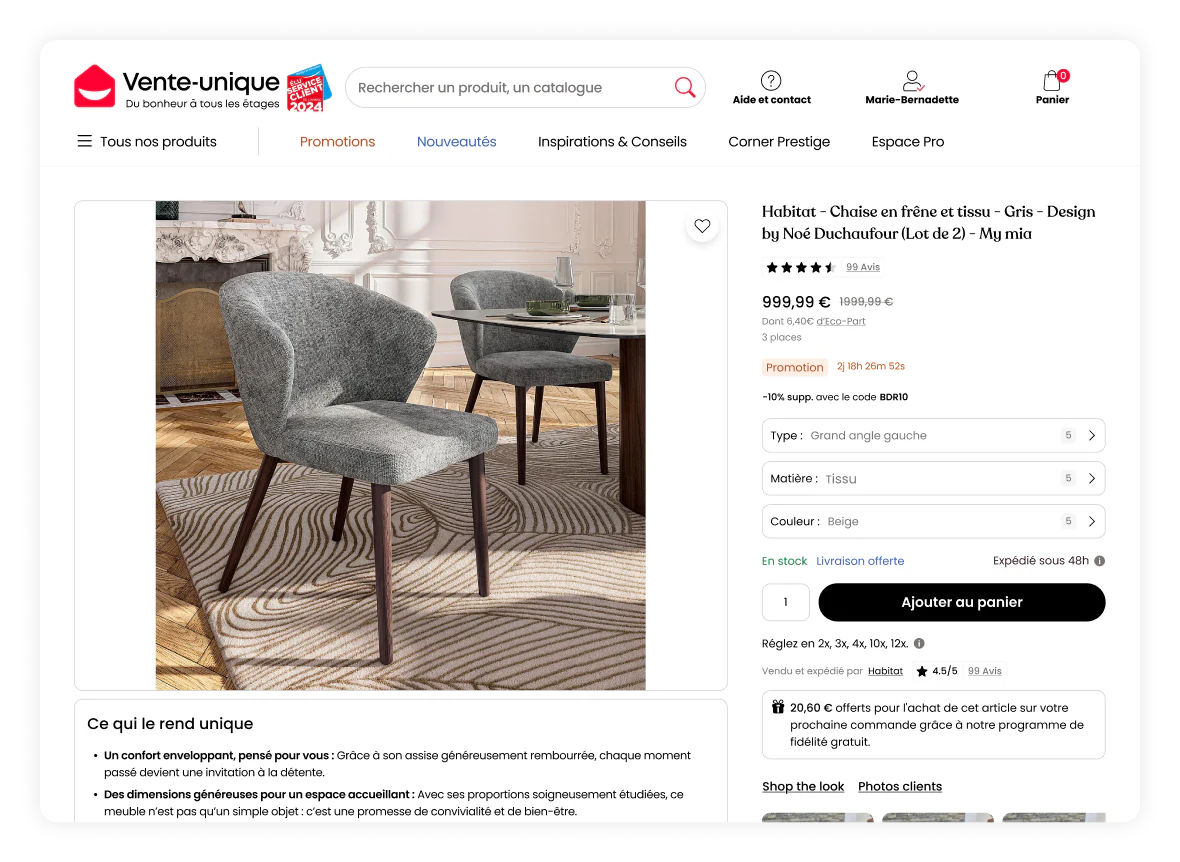
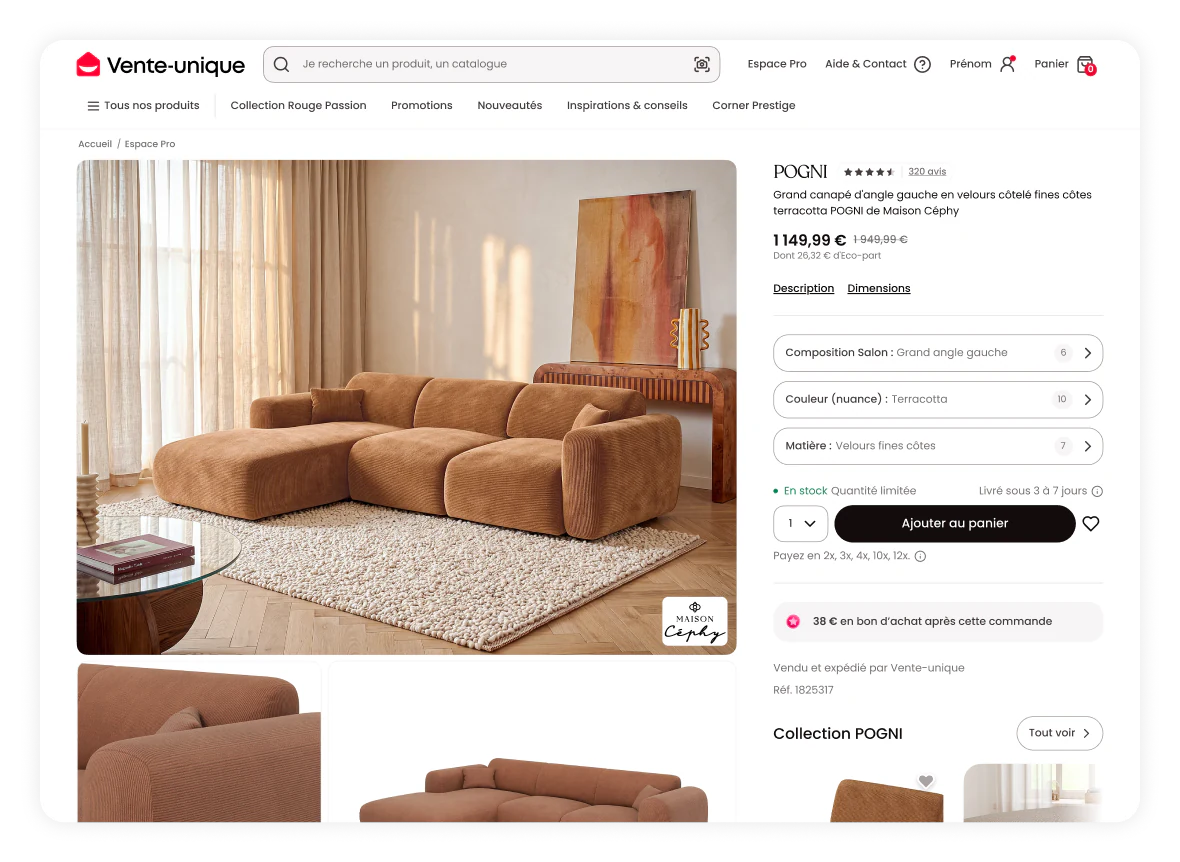
What moved the business metrics were design decisions, delivered at that pace. The product page redesign, which I contributed to through design workshops, raised conversion by 8%. The checkout, redesigned under version 4, cut abandonment by 14% and time spent on the payment step by 61%. It was designed before Minos, and bringing it onto the system is the redesign I'd push next.
Learnings
I'd bring developers in from the very first day of a new version, not once the foundations are set. They ended up shaping names and structures anyway, and they were often right.
I'd design for two brands from the start. Minos began as Vente-unique's system and Habitat was folded in along the way, which is harder than planning for both from day one.
And I'd write the guidelines for two kinds of readers: the people using the system and the AI agents now building with it. Clear rules are what stop drift, whoever writes the code. It's what I've since done on the design system behind this portfolio, with written laws and a checker that refuses any component breaking them.

Florian Faure
Product Designer